
Every product that crosses a border needs a number. Not a barcode, not a SKU — an HS code, the six-to-ten digit tariff classification that tells customs exactly what you are shipping. Get it right and your goods clear quickly at the duty rate you expected. Get it wrong and you are looking at delays, penalties, or a bill for back-duty months after the shipment landed.
Most importers treat classification as paperwork they can guess their way through. It isn't. The code decides your duty rate, whether your product needs a licence, and which trade agreements you can claim. This guide walks through how the code is built, how to find yours, and where people trip up.
What an HS code actually is
HS stands for Harmonized System — a catalogue of goods maintained by the World Customs Organization and used by more than 200 countries. Because everyone starts from the same six digits, an exporter in Vietnam and an importer in Germany can describe the same coffee grinder with the same base number. That shared language is the whole point.
The first six digits are international and fixed. After that, each country adds its own digits to set duty rates and collect statistics. In the United States those extra digits make up the HTS (Harmonized Tariff Schedule); in the EU it's the CN and TARIC codes; in the EAEU it's the TN VED. Same root, local endings.
Reading the digits
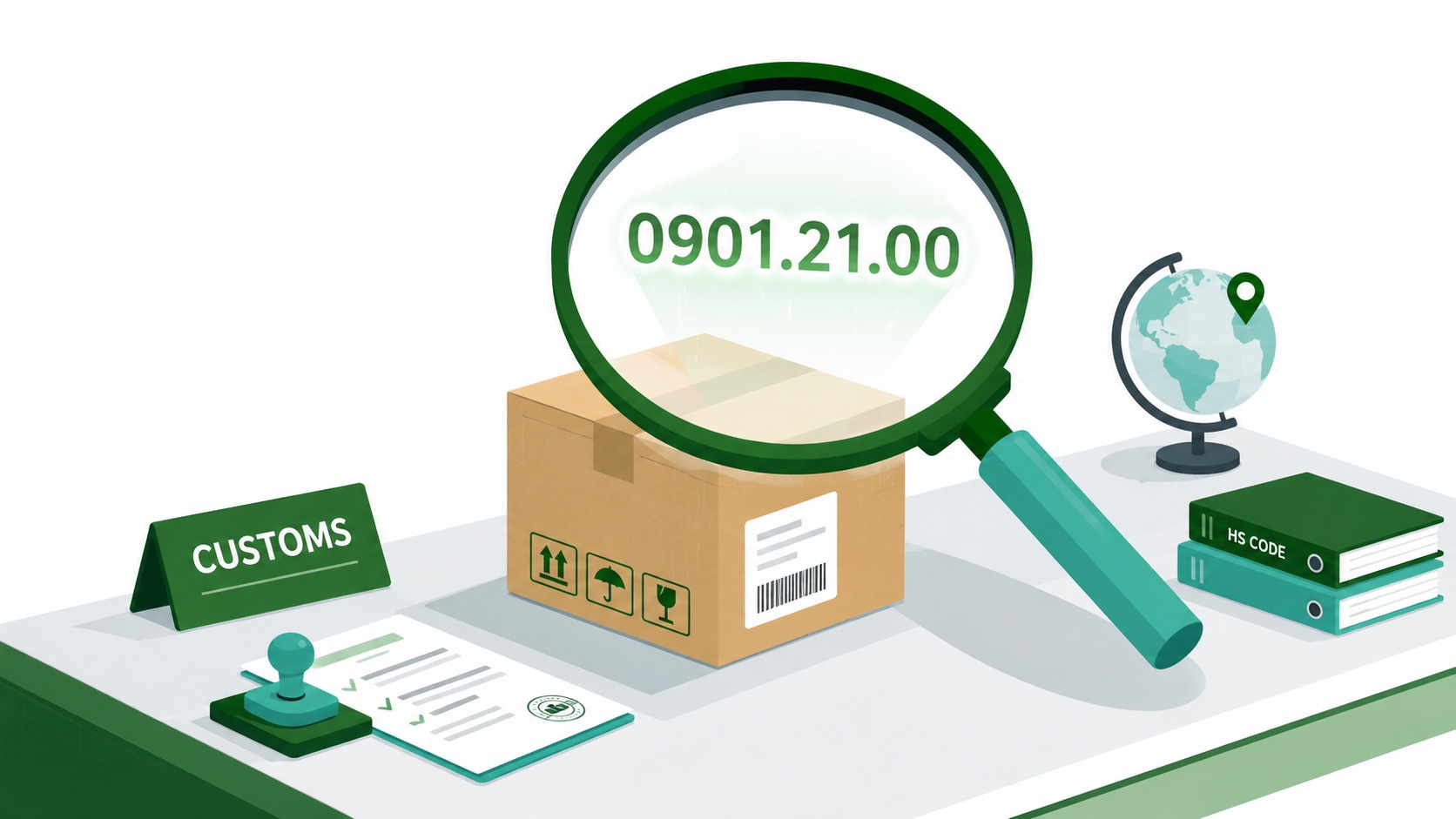
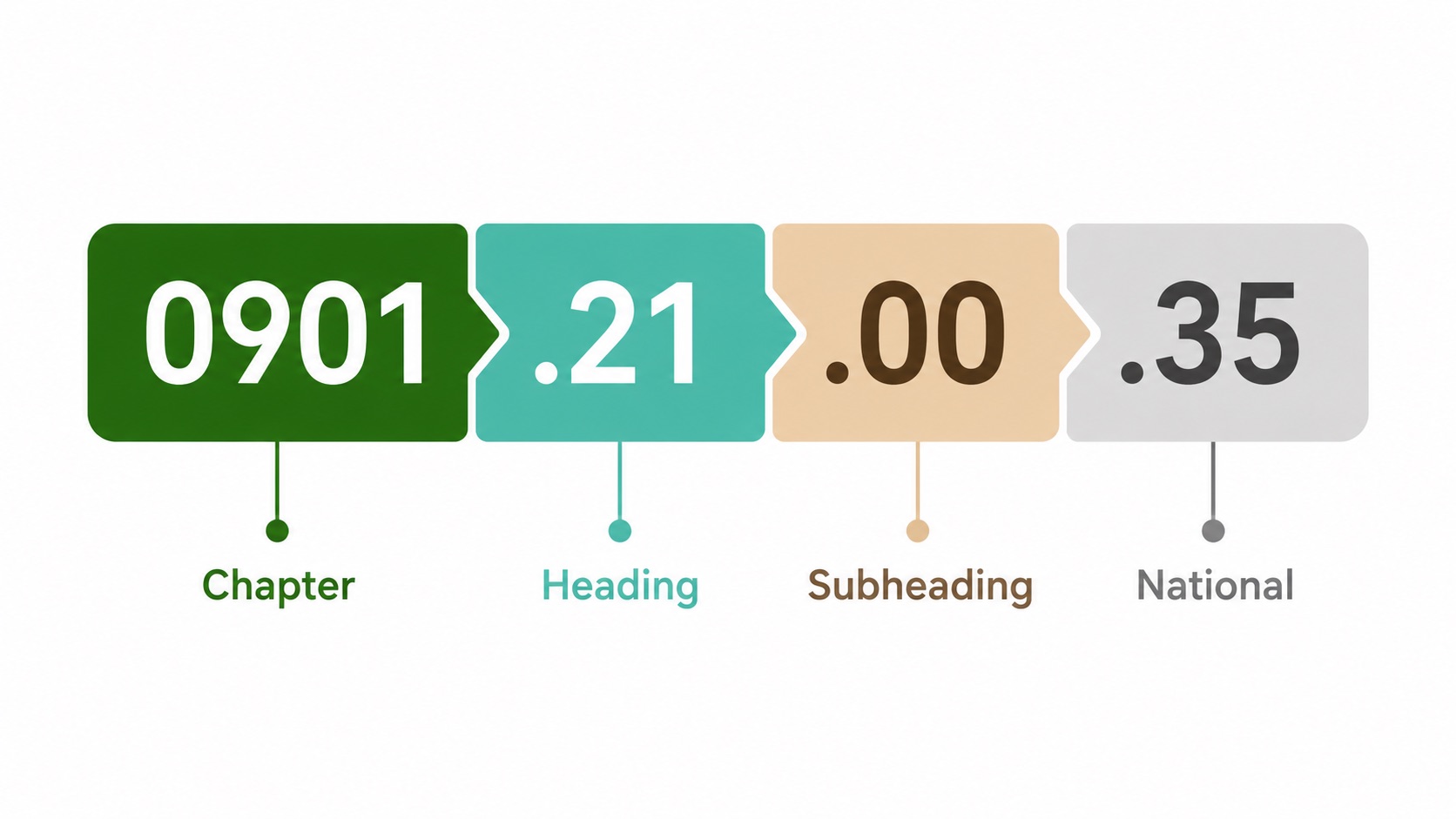
The code isn't random — it narrows from broad to specific as you read left to right. Take 0901.21, roasted coffee:
- 09 — the chapter: coffee, tea, spices.
- 0901 — the heading: coffee.
- 0901.21 — the subheading: roasted, not decaffeinated.
- 0901.21.00.35 — the national tail, added by your country for duty and stats.
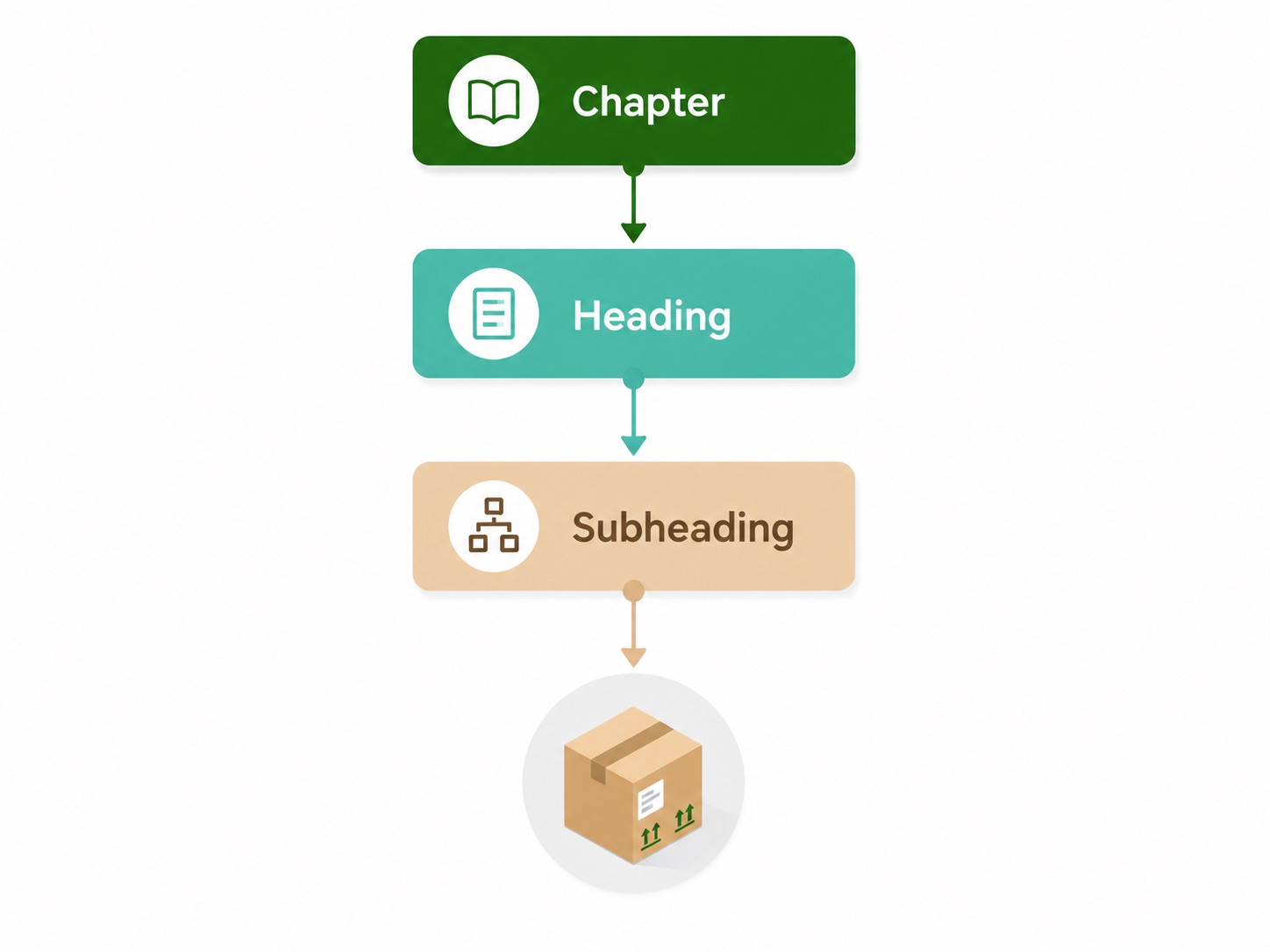
Once you can see this structure, classification stops feeling like a lottery. You are simply walking down a tree: pick the chapter, then the heading, then the subheading that fits your goods most precisely.
Six steps to classify your product
- Describe the item plainly. What is it made of, what does it do, and how is it presented for sale? "Cotton t-shirt, knitted, men's" beats "apparel."
- Find the chapter. Start with the material or function. Textiles sit in chapters 50–63; machinery in 84–85; food in 01–24.
- Drill to the heading and subheading. Read the actual wording of each option, not just the summary. Small words — "of cotton," "not knitted," "for industrial use" — change the code.
- Check the section and chapter notes. These legal notes sit at the top of each section and can pull your product out of the heading you assumed. They override your gut feeling.
- Apply the General Rules of Interpretation (GRI). Six rules resolve the hard cases — sets, mixtures, incomplete goods, items that could fit two headings.
- Confirm the national tail. Look up the last digits in your country's tariff schedule to land on the exact duty rate.
If you sell on taxprice.org's covered routes, you can search the tariff directory by code and country to confirm the rate before you commit — worth doing while the shipment is still a plan, not a problem.
HS, HTS, commodity code — what's the difference?
The names change by region and it confuses people constantly. Here is the short version:
| Name | Where it's used | Digits |
|---|---|---|
| HS code | International base (WCO) | 6 |
| HTS code | United States imports | 10 |
| CN / TARIC | European Union | 8 / 10 |
| Commodity code | UK, general term | 10 |
| TN VED | EAEU (Russia, Kazakhstan…) | 10 |
The takeaway: the first six digits are shared worldwide, so a supplier's HS code is a solid starting point — but never paste it straight into a US or EU entry. Always extend it to the local length yourself.
Where importers go wrong
A few mistakes show up again and again, and each one has a price tag:
- Trusting the supplier's code blindly. Your supplier classifies for export from their country. The duty consequence is yours, in your country.
- Classifying by what a product is called instead of what it is. A "smartwatch" is not classified as a watch — its function decides the chapter.
- Ignoring the chapter notes. They quietly exclude goods you'd swear belonged there.
- Reusing an old code without checking. The Harmonized System is revised every five years. A code that was correct in 2017 may not exist today.
If the classification is genuinely ambiguous, don't guess and hope. Most customs authorities issue a binding ruling — a written decision you can rely on and that protects you if an officer disagrees later.
Before you ship
Classification is fifteen minutes of careful reading that saves you a week of arguing with a customs broker. Write down the item, walk the tree, read the notes, extend to the local digits, and confirm the rate. Do that once per product and keep the result on file.
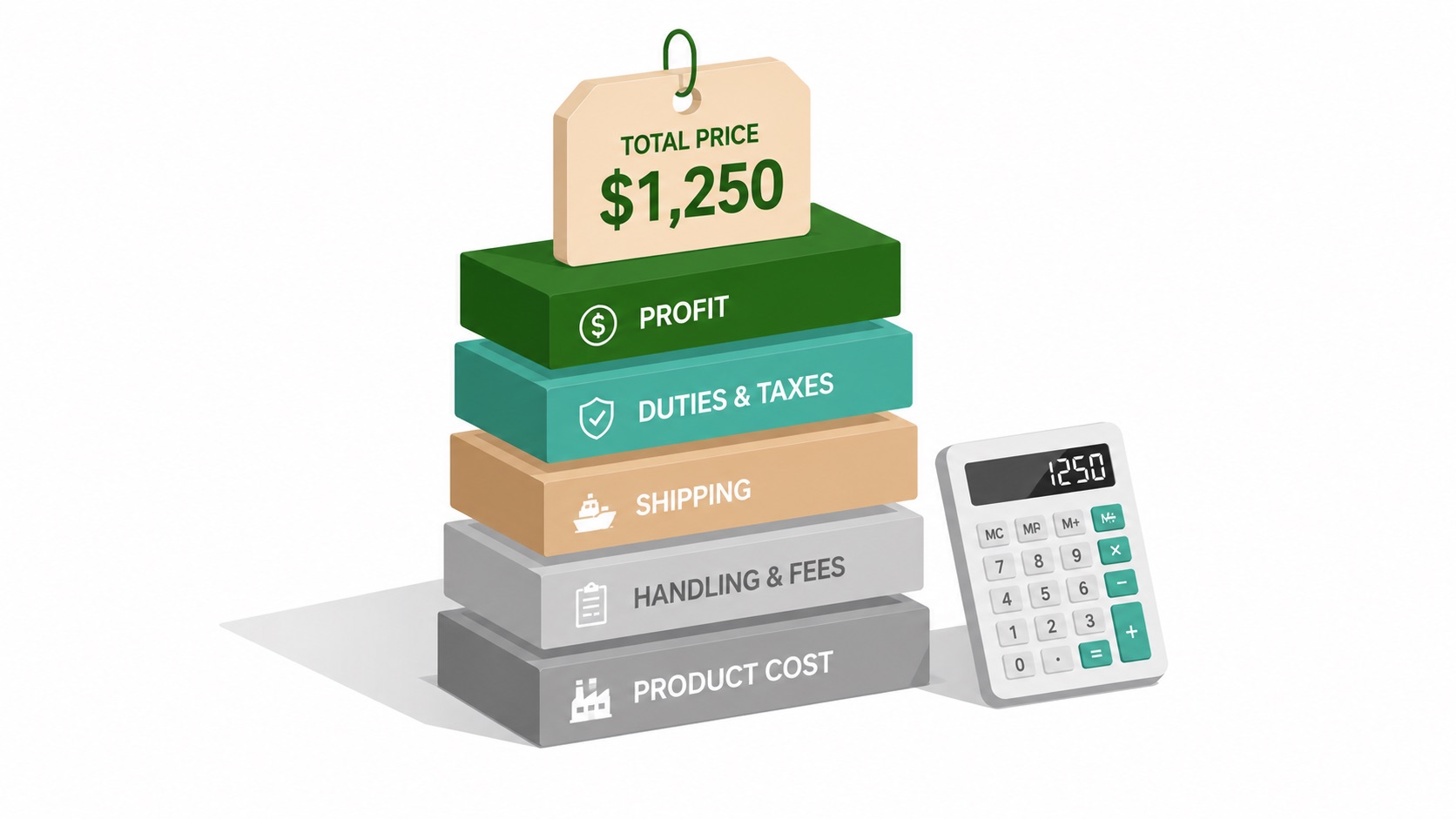
When you know the code, you can see the real cost of importing before you order — duty, VAT, and fees on top of the price you negotiated. That's the number that decides whether a product is worth selling at all.